
Food Flavors: Will Dentures Affect My Sense of Taste?
August 23, 2026
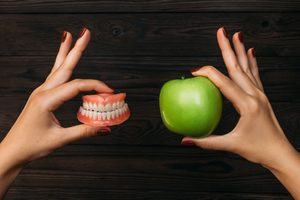
If you’ve experienced significant tooth loss and are seeking a lifelike way to rebuild your smile, you may be a good candidate for dentures. Although they are the tried-and-true solution for replacing missing teeth, they remain popular because of their many advantages.
For example, your prosthetics can return a portion of your original chewing power so you can enjoy a wider variety of wholesome foods. But it’s natural to have questions, like whether eating with dentures affects your sense of taste. Continue reading to learn more about it so you know what to expect!
How Do Dentures Work?
Full dentures usually consist of a gum-colored base, often made from resin or acrylic, that can be carved and shaped to resemble your natural gums. This provides the structure and support for the artificial teeth, or pontics, usually crafted from tooth-colored ceramic that can be customized to match the size, shape, and tone of your natural teeth for beautiful, lifelike results.
These restorations rely on a firm suction against the connective tissues over the bony ridges in your mouth to remain in place throughout the day. It can often take about a month to fully acclimate to wearing them regularly, and you might notice sores or develop a temporary lisp during this transition. Thankfully, these changes usually dissipate once you’ve completely adjusted to your new teeth.
How Do We Detect Different Flavors?
Did you know that the average person has an estimated 2,000 to 10,000 taste buds in their mouth? These receptors can be found in the tiny bumps on your tongue, called papillae, or on the soft palate, the roof of your mouth, the back of your throat, and on your upper esophagus.
Your taste buds are responsible for detecting different flavors, such as salty, sour, sweet, bitter, or umami (savory), from the foods that you eat and transmit that information to your brain, which is how you know what your meals taste like.
Will Wearing Dentures Affect My Sense of Taste?
Some patients wearing dentures complain that foods taste blander than they’re accustomed to, which can sometimes occur because the acrylic base covers a large portion of your taste buds. Thankfully, this is often a short-term condition that resolves itself once your mouth adjusts to wearing your restoration more regularly.
However, you might also notice a foul smell or flavor when wearing your dentures if they’re dirty or have developed plaque. You can help avoid this by removing them to gently scrub all their surfaces twice daily with a soft-bristle toothbrush and clear dish soap that are unlikely to harm the material.
If you continue to notice an unwelcome or yucky flavor coming from your dentures, it may be time to contact your dentist for a professional cleaning!
Meet the Author
Dr. John T. Thompson is passionate about helping individuals and families build and maintain happy, healthy smiles. He earned his Doctor of Dental Surgery from the Baylor College of Dentistry in 1985, and today, he proudly provides a complete menu of services, including dentures, to meet your unique needs under one roof. He takes the time to get to know you, then uses advanced technology to devise customized treatment plans for accurate results meant to last. You can request an appointment on the website or call (361) 242-3151.
No Comments
No comments yet.
RSS feed for comments on this post.
Sorry, the comment form is closed at this time.